
From the Conference Hall to the Energy Conversation: Bringing Switch Campus to the University of Miskolc
Written by Chinazaekpere Arukwe
Some milestones are measured by certificates or awards. Others are measured by the opportunities you create for others.
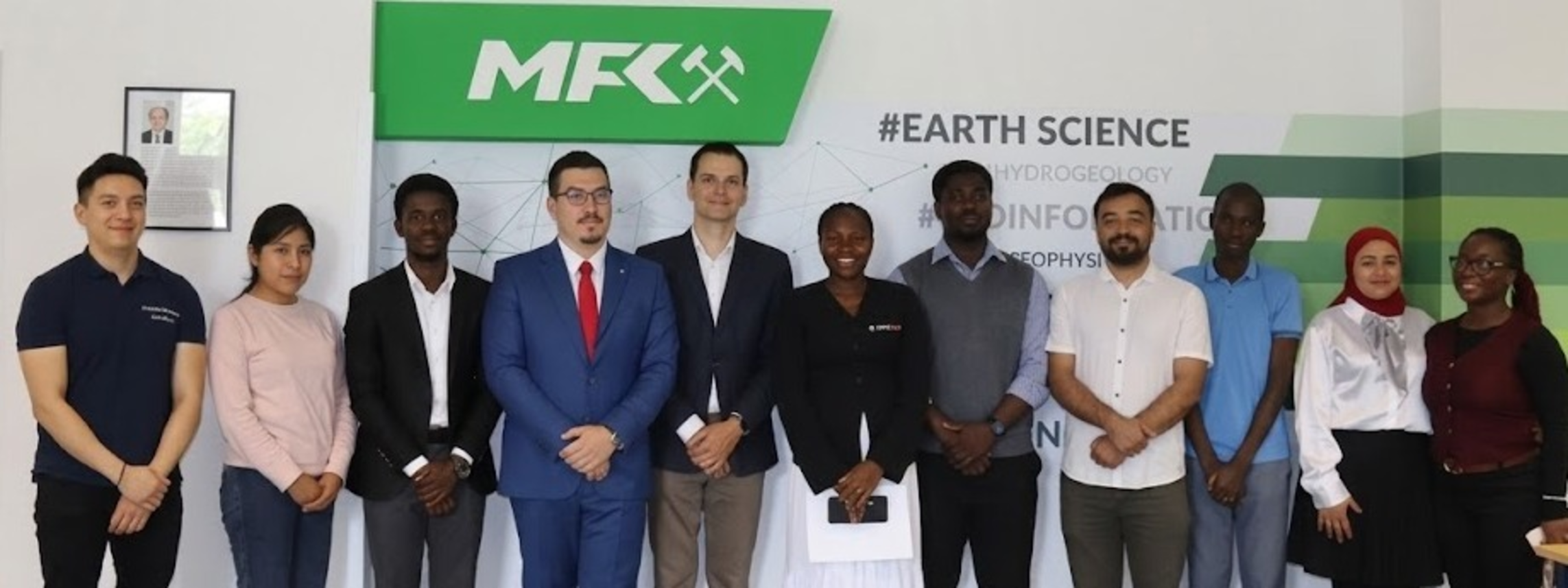
That was exactly how I felt as I hosted a Switch Energy Alliance side event during the 3rd International Earth Science and Engineering Conference at the University of Miskolc, Hungary.
As an international master's student studying Earth Science Engineering, organizing a Switch Campus event within an international scientific conference was a significant milestone for me. More importantly, it was an opportunity to create a space where students could explore how they, too, can become part of solving one of the world's greatest challenges: energy poverty.
Bringing the Energy Conversation to Campus
Working alongside the Faculty of Earth and Environmental Science and Engineering, the International Student and Alumni Network (ISAN), the EAGE Student Chapter, and the AAPG Student Chapter, we hosted a SwitchOn screening followed by an introduction to the Switch Global Case Competition.
The goal was simple: bring students into the energy conversation.
Research conferences are excellent spaces for sharing scientific discoveries, but they are also opportunities to connect those discoveries to real-world impact. Through SwitchOn and the Switch Competition, participants were introduced to the human side of energy—how reliable, affordable, and sustainable energy influences education, healthcare, economic development, and quality of life around the world.
Energy Transition Looks Different Around the World
One of the most meaningful aspects of the session was the opportunity to exchange perspectives.
Studying in Europe has given me the chance to observe how energy transition is progressing in developed economies. Coming from Nigeria, I also carry with me the lived experience of energy poverty and the challenges that millions of people across developing countries continue to face.
Bringing these perspectives together reinforced an important lesson:
There is no one-size-fits-all solution to the energy transition.
Each country has unique resources, priorities, and challenges. Meaningful progress requires collaboration, local understanding, and a willingness to learn from one another.
Students Are Already Shaping the Future
I was also privileged to deliver a presentation titled "Sustainability and Energy Transition: The Student Perspective."
One of my favorite moments came afterward, during conversations with students whose research focuses on geothermal energy exploration and production, solar panel waste upcycling, mineral resources, and energy policy implementation.
Those conversations reminded me that the future of energy is inherently multidisciplinary.
Engineers, geoscientists, policymakers, environmental scientists, economists, and communicators all have important roles to play.
The challenge of energy poverty cannot be solved by one profession alone.
Why the Switch Competition Matters
As a former participant in the Switch Global Case Competition, introducing students to the competition felt especially meaningful.
The Switch Competition transformed the way I think about energy.
Before participating, I understood energy poverty primarily through my personal experiences growing up in Nigeria. The competition challenged me to see energy as a complete system involving technology, finance, policy, infrastructure, leadership, and human development.
Working with my team to develop ten-year energy plans helped me realize that young people do not have to wait until they become industry experts before contributing solutions.
That realization ultimately shaped both my professional journey with Switch Energy Alliance and my academic path in Earth Science Engineering, where I now focus on the intersection of sustainable energy systems and responsible mineral resource exploration.
Today, I see the Switch Competition as much more than a competition.
It is a starting point.
A place where students begin developing the systems thinking, collaboration, and leadership needed to tackle global energy challenges.
The Conversation Continues
Hosting this event reminded me that some of the most impactful conversations happen outside the classroom.
They happen when students from different countries, disciplines, and experiences come together with a shared desire to learn and make a difference.
That is exactly what Switch Campus exists to do.
Through The Grid, these conversations don't end when an event is over. They continue through a global community where students can learn, collaborate, share ideas, discover opportunities, and develop solutions together.
Whether you are passionate about engineering, geoscience, policy, entrepreneurship, or sustainability, there is a place for you in the energy conversation.
Because ending energy poverty will require more than technology.
It will require people.
People willing to learn.
People willing to collaborate.
People willing to lead.
And perhaps your journey begins with a single conversation on The Grid.