
Who Will Mine the Minerals for Europe’s Energy Transition?
Who Will Mine the Minerals for Europe’s Energy Transition?
By Chinazaekpere Arukwe
With contributions from Nii Sowah, Africa Regional Ambassador, Switch Ambassador Network
We talk about electric vehicles, renewables, batteries and climate targets. But one question deserves more attention: Who will develop the minerals needed to make this transition possible?
These technologies depend on minerals that must be explored, extracted responsibly, processed or recycled and on skilled people: geoscientists, mining engineers, mineral processors and environmental specialists.
From Zagreb to a question about talent
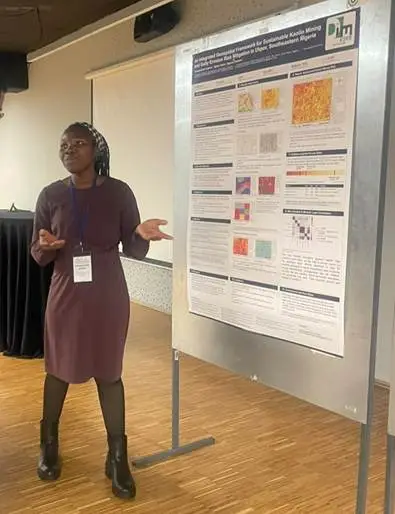
At the DIM-ESEE Conference in Zagreb, Croatia (21–23 October 2026), I presented our research on sustainable kaolin mining and gully erosion risk mitigation in southeastern Nigeria. Beyond my presentation, the discussions during the “Raw Materials Education” session prompted me to reflect on an important question: Are we preparing enough young professionals with the skills and competencies needed to achieve Europe’s mineral resource ambitions?
After studying at the University of Miskolc in Hungary and now Wrocław University of Science and Technology in Poland, I ask: Are enough young people being inspired and prepared for careers in this sector?
After the conference, a conversation with my colleague Nii Sowah, Africa Regional Ambassador at the Switch Ambassador Network, deepened that reflection. While preparing for the Pan-African Regional Debate Competition, we discussed perceptions of mining and geoscience careers.
More than minerals
The EU’s Critical Raw Materials Act sets 2030 benchmarks of 10% for extraction, 40% for processing and 25% for recycling of annual strategic raw materials consumption. Yet resources, investment and technology cannot deliver responsible development without skilled professionals.
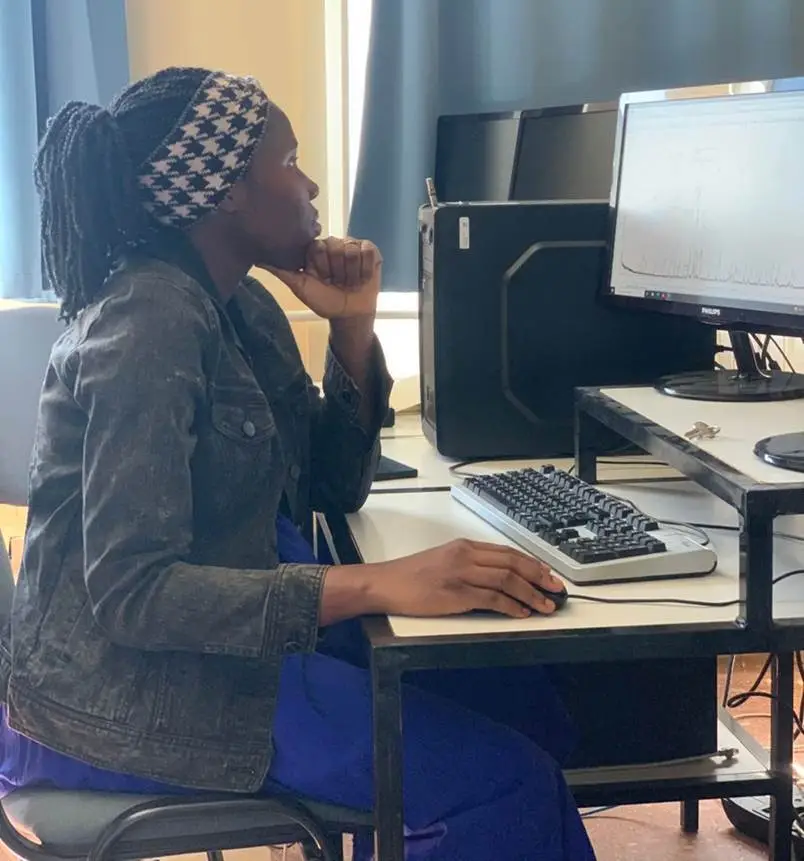
Who will map deposits, interpret geophysical data, improve mineral recovery and integrate automation with environmental monitoring?
Perhaps mining has an image problem
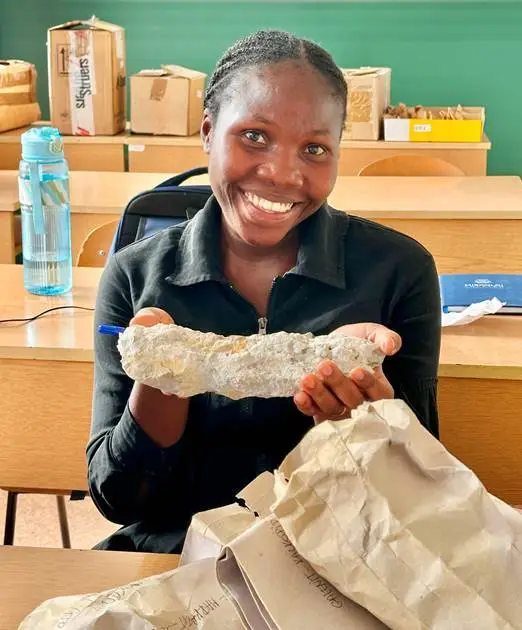
For some young people, mining evokes danger, environmental damage, remote sites and physically demanding work. These concerns matter: irresponsible practices have harmed communities and trust.
But modern mineral resource careers also involve GIS, remote sensing, artificial intelligence, robotics, geothermal exploration and sustainability. Do secondary school students see this wider picture?
We cannot expect young people to pursue opportunities they barely understand. Rebuilding trust also requires responsible practice, not marketing alone.
The people behind the transition
Workforce and skills concerns are not identical across European countries or universities. A reported shortage of specialists is also not proof that enrolment is falling everywhere. The question is whether the talent pipeline is growing quickly enough to meet future needs.
International students contribute expertise and fresh perspectives, but international mobility should complement, not replace, efforts to inspire local students. Both groups deserve opportunities to contribute.
The next generation will not emerge simply because we need them. We must inspire, educate, mentor and create meaningful pathways into the sector.
So, I ask students, educators and industry professionals: What discourages young people from choosing geoscience and mining engineering, and what can we do differently?
In Part 2, I explore how education, technology, mentorship and communities like Switch Campus can help.
Further reading: European Commission, Critical Raw Materials Act; Education and Training Monitor 2025; OECD, Enhancing Regional Mining Ecosystems in the European Union.